

Today’s Tuesday post is a sequel to last week’s introduction of the mysterious (and allegedly cursed) color that captured the imaginations of 1920s filmgoers – “Phantom Red”. If you missed it, you can learn more about the color’s silent film origins in the 1925 film The Phantom of the Opera here:
The idea of a mystical color capable of seducing minds and hearts with equal potency whether in the form of a skull-headed spirit projected from a cinema screen or a glossy lipstick on a department store shelf is intriguing.
The reality behind its supernatural power is somewhat less arcane, though no less fascinating. It’s no accident that the color of magic in this case was a violent shade of red. The pioneering two-color Technicolor process used in the Masquerade scene in Phantom of the Opera involved a specially designed camera with a beam-splitting prism to filter red and green light paths. In an impossibly complex process rather akin to potion brewing and alchemy, the resulting footage was bathed in special chemicals and dyes, glued, emulsified and bonded in a cementing machine. After this grueling metamorphosis, the film was ready to be run in front of the scorching white light of a projector beam. As the technique was limited to only two color separations, it didn’t have the capacity to accurately capture blues, purples, and yellows. It did however provide stunningly rich and vivid reds.
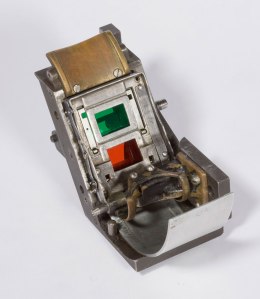
This limitation became a huge advantage when lending an unearthly vibrance to the flaming red of the Phantom’s cloak. Despite its strikingly sinister look, the color itself was innocent of any violent intent. The sorcery that made its appearance possible is another matter. All the intricate chemical and mechanical manipulations the film had to be subjected to produced film stock that was more light sensitive and even more temperamental and combustible than regular black and white film when exposed to the extreme heat of early projection technology.
By its nature, a film featuring Phantom Red could easily become a dangerous weapon. But what if somehow, the perilous and unnatural methods that gave the color life on film could spread their taint to all the other applications of “Phantom Red”? A cursed color after all! Combustible evening gowns, face-melting cosmetics, explosive Christmas baubles, toxic red velvet cupcakes … so many great possibilities. After all, how can you resist “the most cheerful hue of the fall season”? Who wouldn’t want a fashionable self-incinerating coat, especially when you can get a matching hat for only $10?
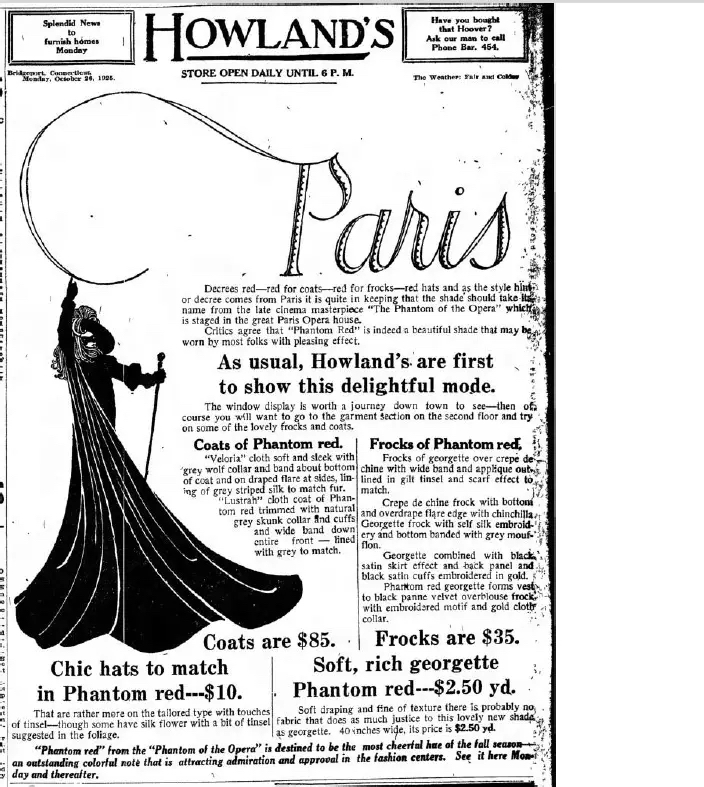
My work-in-progress graphic novel, Phantoms of Vendôme explores some of the more fantastic, even gruesome outcomes.
P.S. – Those of you who, like me, bought this delightful little Phantom figure at FanCon Philadelphia – beware! You now possess a piece of Phantom Red.
Good luck.