
I believe in engaging all my senses when creating art and my work on Napoleon’s Starship is no exception. I’ve already shared a bit about my olfactory adventures as I studied ancient Throrian scent making techniques (see my earlier posts on fragrances and the legendary Throrian Scent Lab). I told you about my foray into 18th century Adorned Prints in my ongoing video series (stay tuned) and I’ve demonstrated my tactile approach to creating my characters by building them like stop motion animation models with my own hands.
Now, I want to talk about food. The culinary arts are a key aspect of just about any culture throughout history and I felt I couldn’t fully understand the ancient civilization I was creating without imagining the taste of their favorite delicacies. With their cult of scent, I was sure Throrian food had to be exquisitely aromatic, rich in subtle flavors, and preferably in liquid form. I knew exactly where to begin my journey – a moldering manuscript, copied by the hands of medieval monks on genuine parchment and preferably illuminated with gold leaf. Monsters sketched in the margins optional, but appreciated.
What deeper and more visceral way do we have to connect with our distant ancestors than through our senses? Archaeologists, scientists and historians have recreated ancient Egyptian beer, the fragrances of ancient Rome, and you can partake in a full-scale Tudor-era feast every Christmas at Hampton Court Palace. (I’m treacherously partial to the marzipan cakes, though in most other things the Tudors and I do not see eye to eye.)
The perfect Earthian equivalent to a Throrian recipe was suggested to me by a very old and very dear friend. His name is Richard, and he’s one of the most accomplished people I know. Fate may have forced him into a political career, but that’s done nothing to dampen his taste for the dramatic or his exquisite sense of art and fashion. His views on literature are fascinating as well and he introduced me to some of my favorite authors. He has the ear of a musician, the nose of a perfumer, the heart of a poet, and the palette of a master chef. I don’t exaggerate when I say his special soup recipe stole my heart.
Next January, Richard turns 658 years old. And he’s every bit as elegant and handsome as he was in his coronation portrait, back in the 1390s.

You may know him better as Richard II, king of England from 1377 to 1399. And no, he’s not Richard I, the famous crusader king. Nor Richard III, who was thoroughly vilified and besmirched by Shakespeare, and whose death at the Battle of Bosworth in 1485 marked the end of the Wars of the Roses. There’s a special place in my heart for each of the three Richards.
But this post is about Richard II, and there’s only one of him.
In Richard, I discovered the medieval human embodiment of all planet Thror’s most valued qualities and skills. I like to think traditional Throrian cuisine is very much like the recipes I found in Richard’s immortal cookbook. I’d like to tell you I discovered this recipe on a scrap of faded parchment when I was exploring the ruins of Pontefract Castle, the place Richard was likely murdered at the age of 33. (Never mind that it was published by the Metropolitan Museum of Art in 1975.)
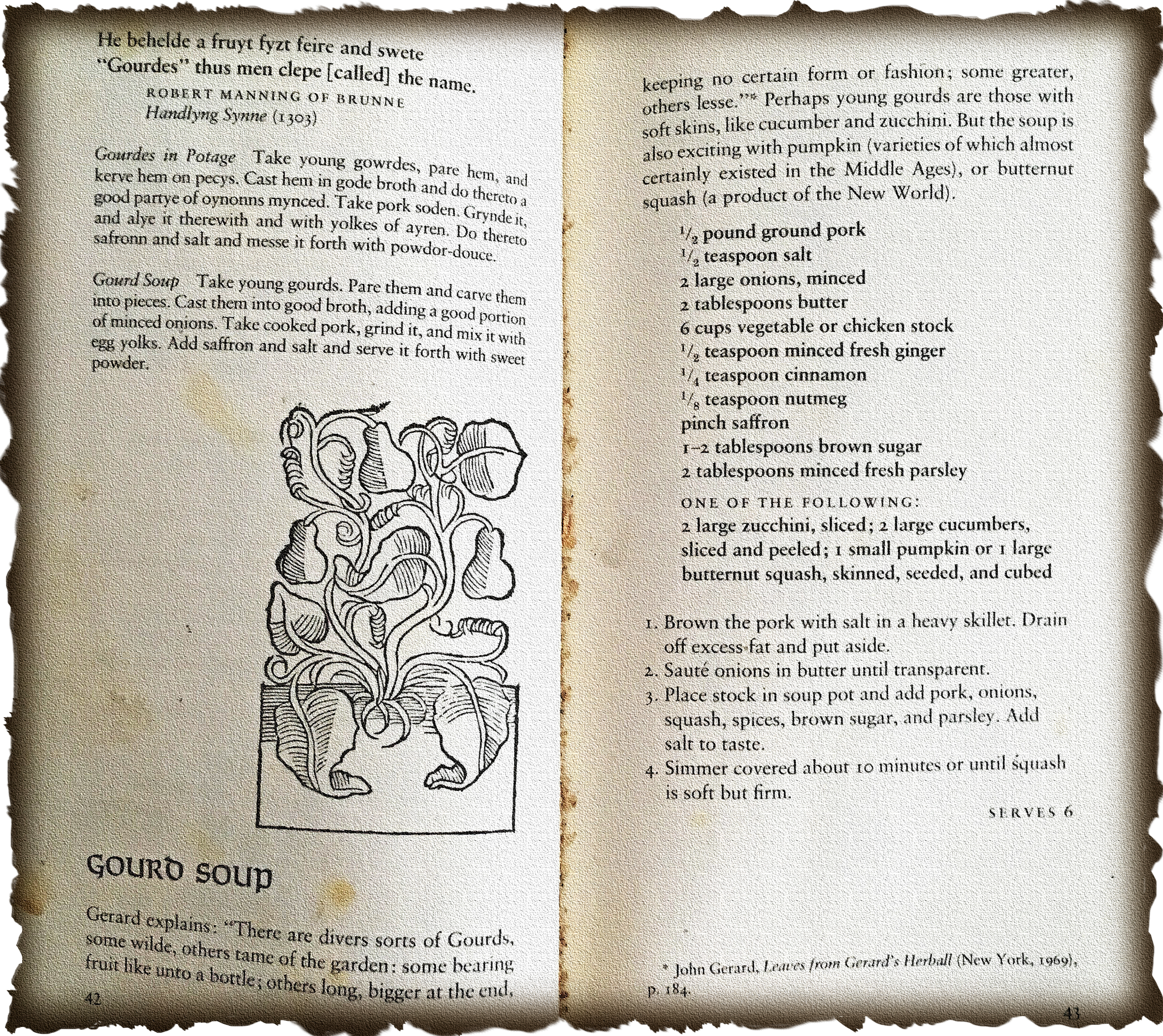
The Forme of Curry, a manuscript commissioned by Richard himself to preserve his favorite recipes for posterity, is one of the earliest known cookbooks written in English (or what passed for English in the time of Richard’s youth). If you’re uncertain where to procure “young gowrdes” or how to “kerve hem on pecys,” don’t despair! As you may have noticed, my mystical parchment includes a helpful translation by medieval literature scholar Lorna J. Sass.
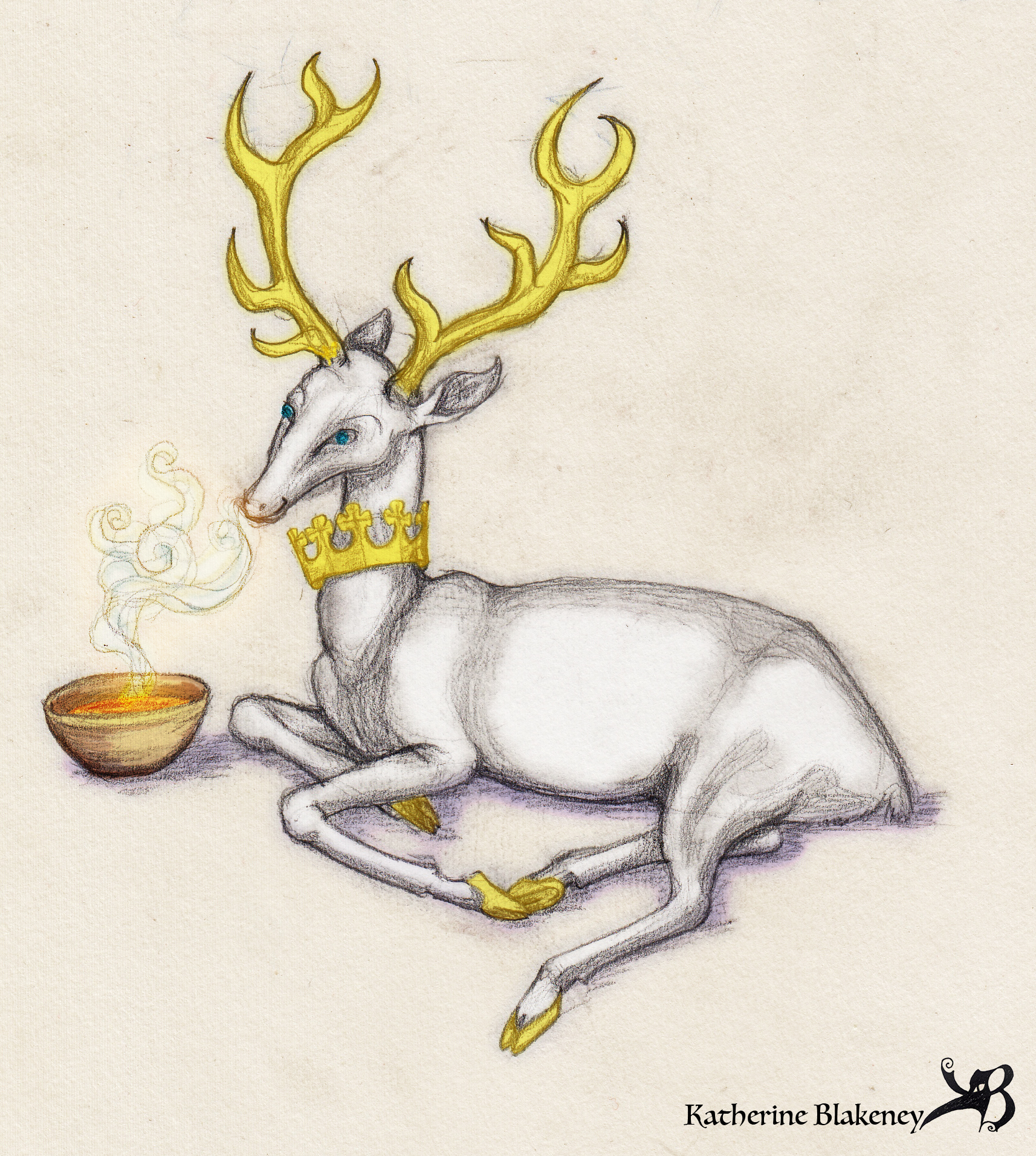
I’ve attempted the original recipe myself more than once, skipping the ground pork to create a lighter vegetarian version. Though Richard was known for having a sensitive stomach I fear it was still far stronger than mine. I also chose to use butternut squash as my “young gowrde.” I hope Richard forgives me for my anachronistic New World gourds. They enhance the soup’s beautiful amber-gold tone, a color I know he greatly admired.
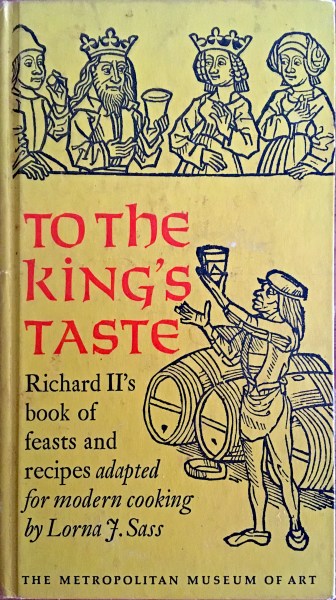
If you’re inspired as I was to delve deeper into the culinary magnificence of Richard’s opulent court, I strongly recommend Dr. Sass’s excellent book, To the King’s Taste. She recreates a number of recipes from the Forme of Curry with helpful advice on identifying and tracking down the right ingredients in the modern world.
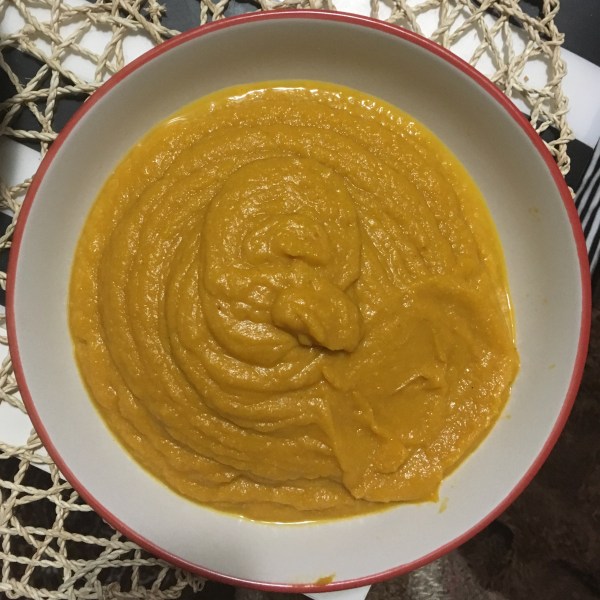
Experimenting with the recipe’s flavors, aromas and textures, I’ve created my own, updated smoothie version of Richard’s gourd soup. It combines the flavors of medieval England with a modern twist and some custom additions of my own.
In homage to my favorite medieval king, I call this recipe the
Richard Smoothie
Ingredients
16 oz of butternut squash, cubed (pumpkin works wonderfully too)
1 cup carrots (mix with slices of sweet pepper for an extra layer of flavor)
1 large onion, minced
1 raw apple, cored and cubed
20 cashews (they add body to the finished product and their sweet nuttiness complements the butternut squash)
1 cup vegetable stock
1 bay leaf
1/2 tsp salt
1/2 tsp minced fresh ginger (powdered ginger works too)
1/4 tsp cinnamon
Pinch of saffron (I take this to mean 2 strands, but feel free to experiment)
2 tbs maple sugar (you can use brown sugar, but I enjoy the subtle undertone that comes from maple syrup)
1 tbs peanut powder (a highly unorthodox addition, but it gives the smoothie a beautiful velvety texture)
Directions
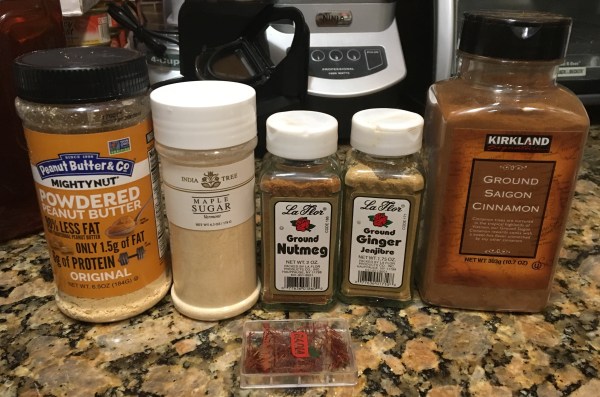
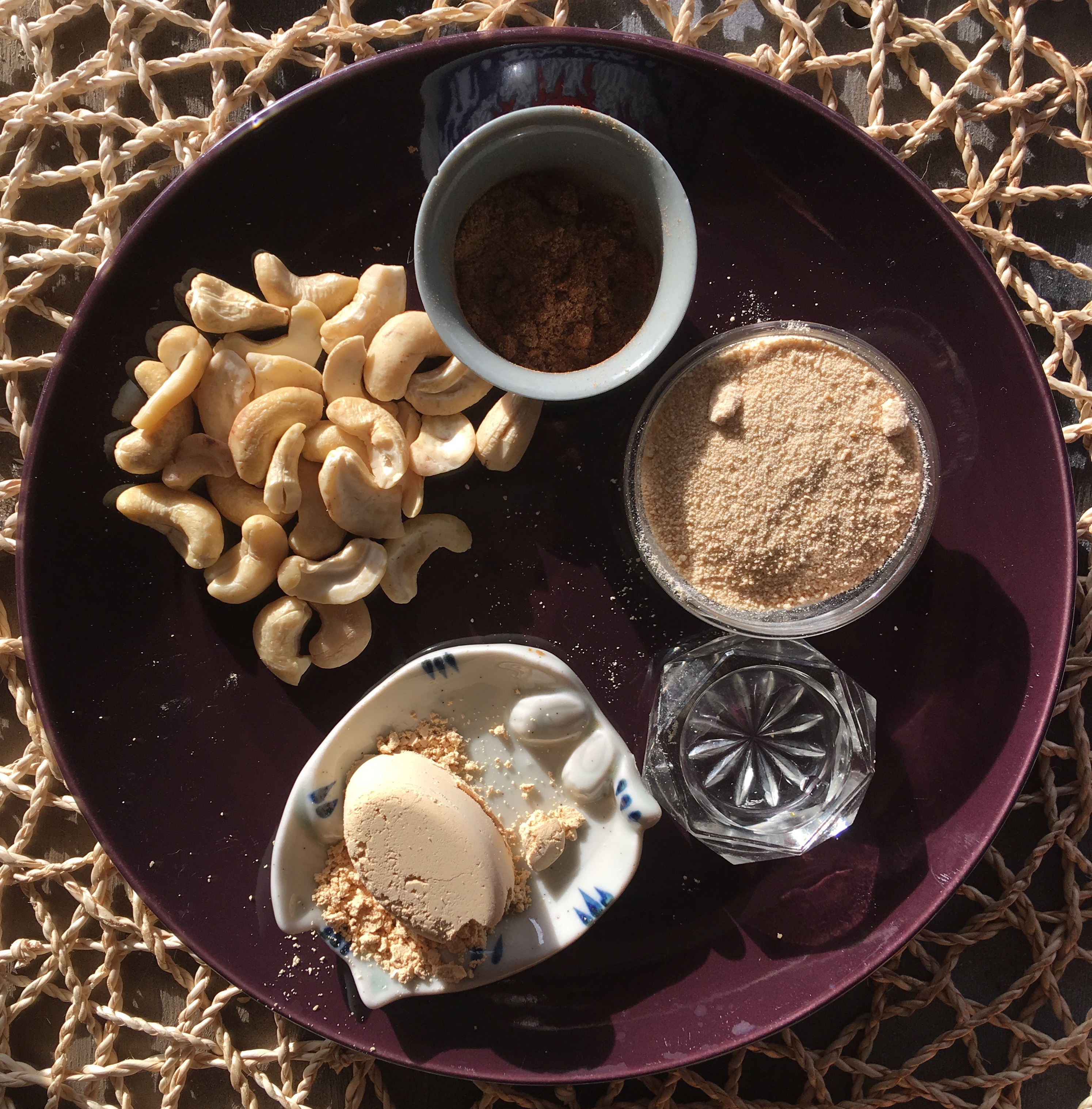
I make somewhat of a ritual of measuring out my spices and daintier ingredients before I begin. It helps the process run more smoothly later on. I confess I also enjoy playing with my little measuring spoons and composing the spices on a plate to look at while I work with the other ingredients. I like to see this as a nod to the aesthetic flair Richard infused into everything he did.
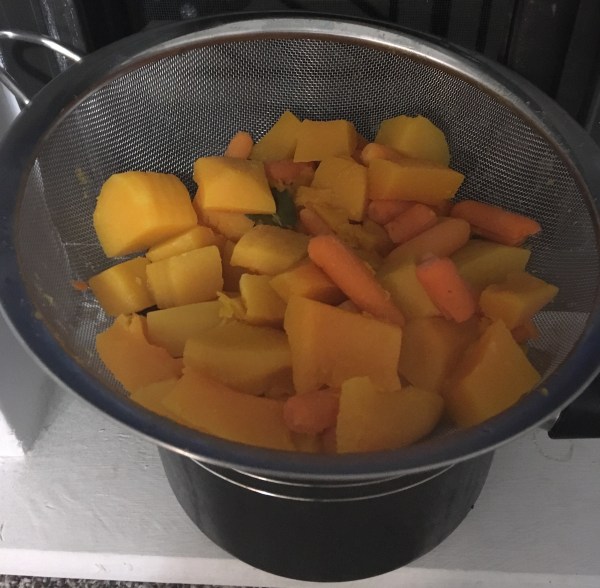
- Boil the squash and carrots (and peppers if you’re adding them) until easily pierced by a fork. Add the bay leaf for the last few minutes of boiling.
- Drain, preserving the resulting stock in a separate container. Set vegetables aside to cool.
- Measure out 1 cup of stock and drop in your saffron. I find that doing this while the stock is still hot helps to distill more flavor and color from the saffron. Set aside to cool.
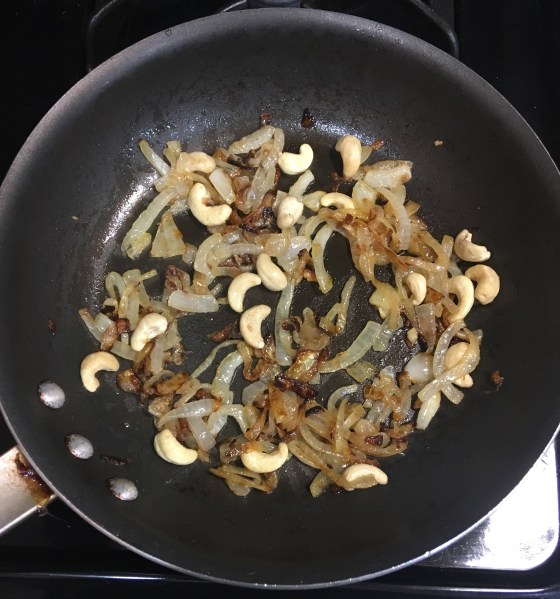
- Fry the onions. As soon as they begin to brown, add the cashews. When the cashews turn brown as well, transfer the onions and cashews to a plate and leave them to cool.
- Once your stock has cooled to room temperature, mix in the salt, ginger, cinnamon and maple sugar.
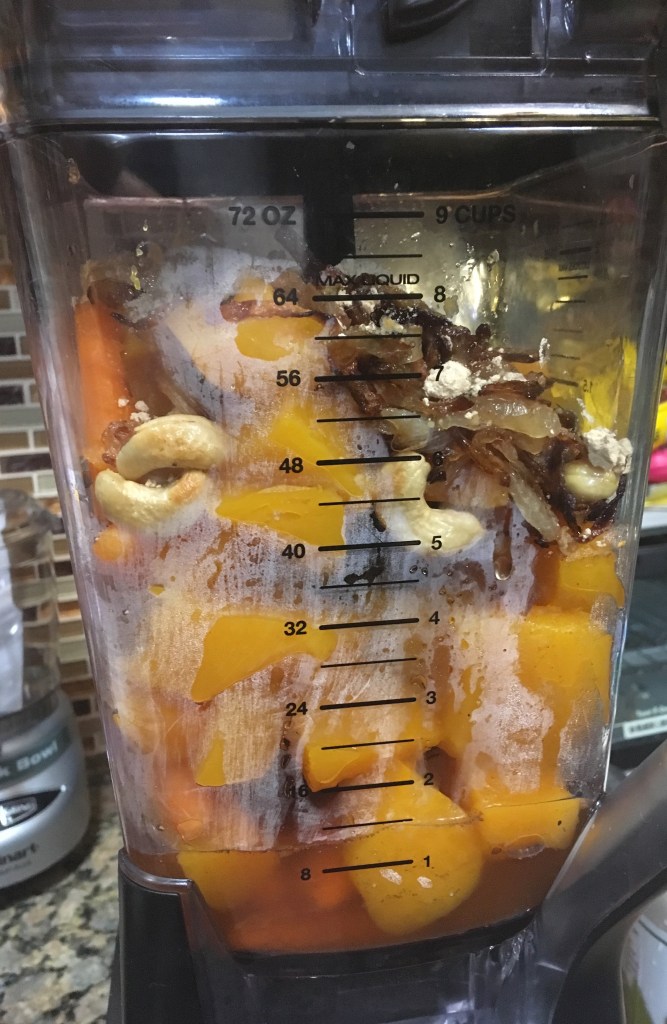
- You’re now ready to start blending! I recommend a proper smoothie maker, but any kind of blender should do. Take your raw, cubed apple and put it in first. Next, layer in the boiled vegetables, then the cashews and onions. Carefully sprinkle in the peanut powder and pour your fragrant vegetable stock over everything.
- Set to medium speed and bend until smooth and creamy.

Pour into bowls and imagine you are traveling through time and space to the subterranean royal palace of ancient Thror!
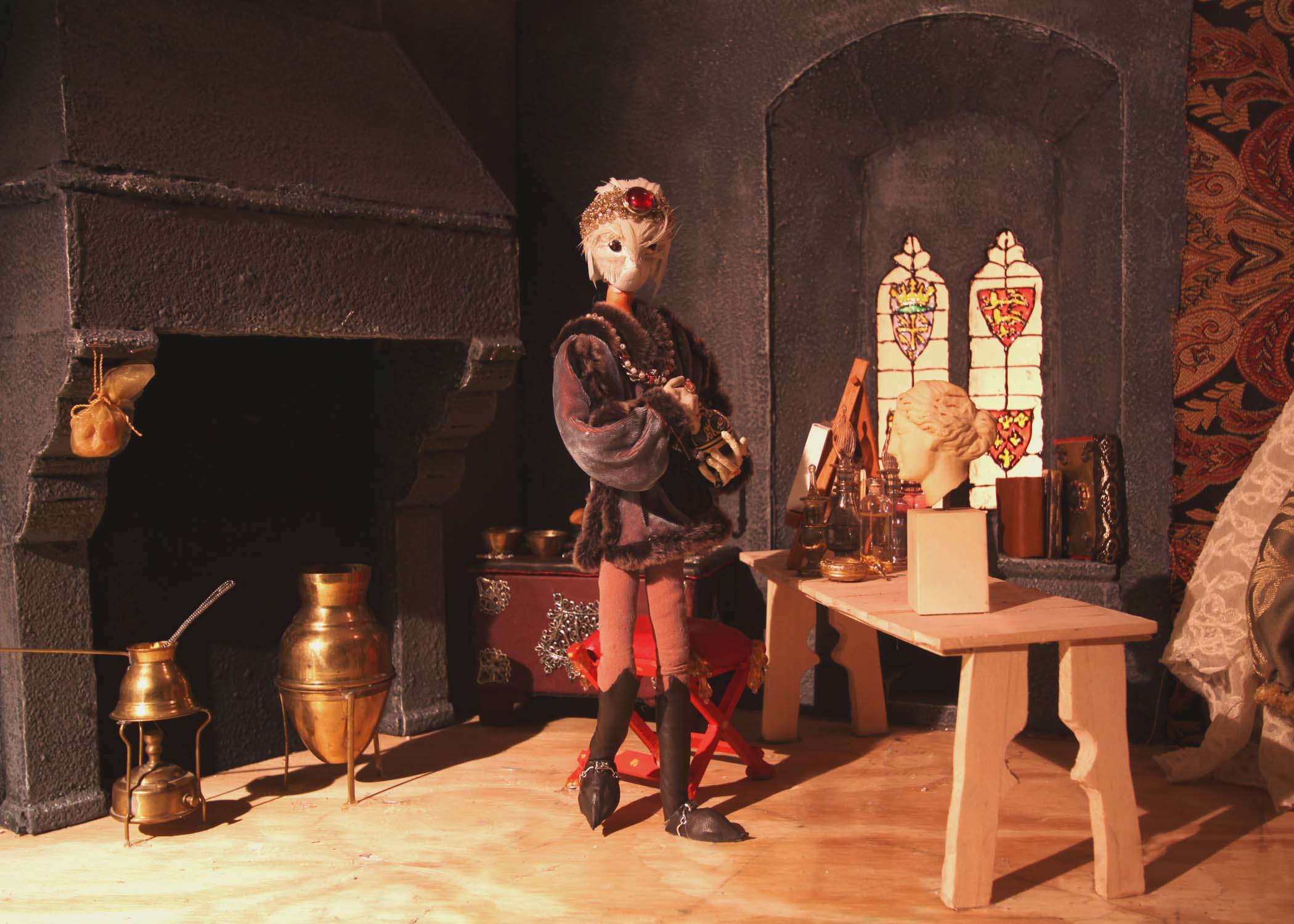
Though Richard had dozens of the best chefs working his cavernous kitchen to feed thousands of guests, I like to imagine him sneaking off in the middle of the night to brew some special soup on his own terms. He cared so much about ceremony and spectacle in his public life, it seems only proper he’d take the solemn process of cooking just as seriously. In my stop motion animated short film, The Dreams of Kings, I recreated my fantasy of Richard’s soup-making ritual, which looks more than a bit like the process of brewing and distilling fragrances, just like in a Throrian Scent Lab. This film is my symbolic interpretation of Richard’s tragic life and fascinating personality. It’s dedicated to his memory.
Keep watching this blog for more insights into the world building process for Napoleon’s Starship, and all the unexpected, bizarre and unusual references I drew from art, history, literature and film. The next installment of my video series on making an Adorned Print is coming up!
As always, don’t forget to check out the Napoleon’s Starship campaign on Kickstarter and share the link with everyone you know in this galaxy and beyond. 17 days to go!

Links:
• Sass, Lorna J. To the King’s Taste: Richard II’s Book of Feasts and Recipes Adapted For Modern Cooking by Lorna J. Sass. New York: The Metropolitan Museum of Art, 1975.
• Richard II by William Shakespeare – Shakespeare is an appalling historian and his chronology is all off, but his Richard II is still a deeply moving and under-appreciated play. Please don’t confuse it with Richard III.
• The Dreams of Kings (2010):
Official page
Link to complete film

